
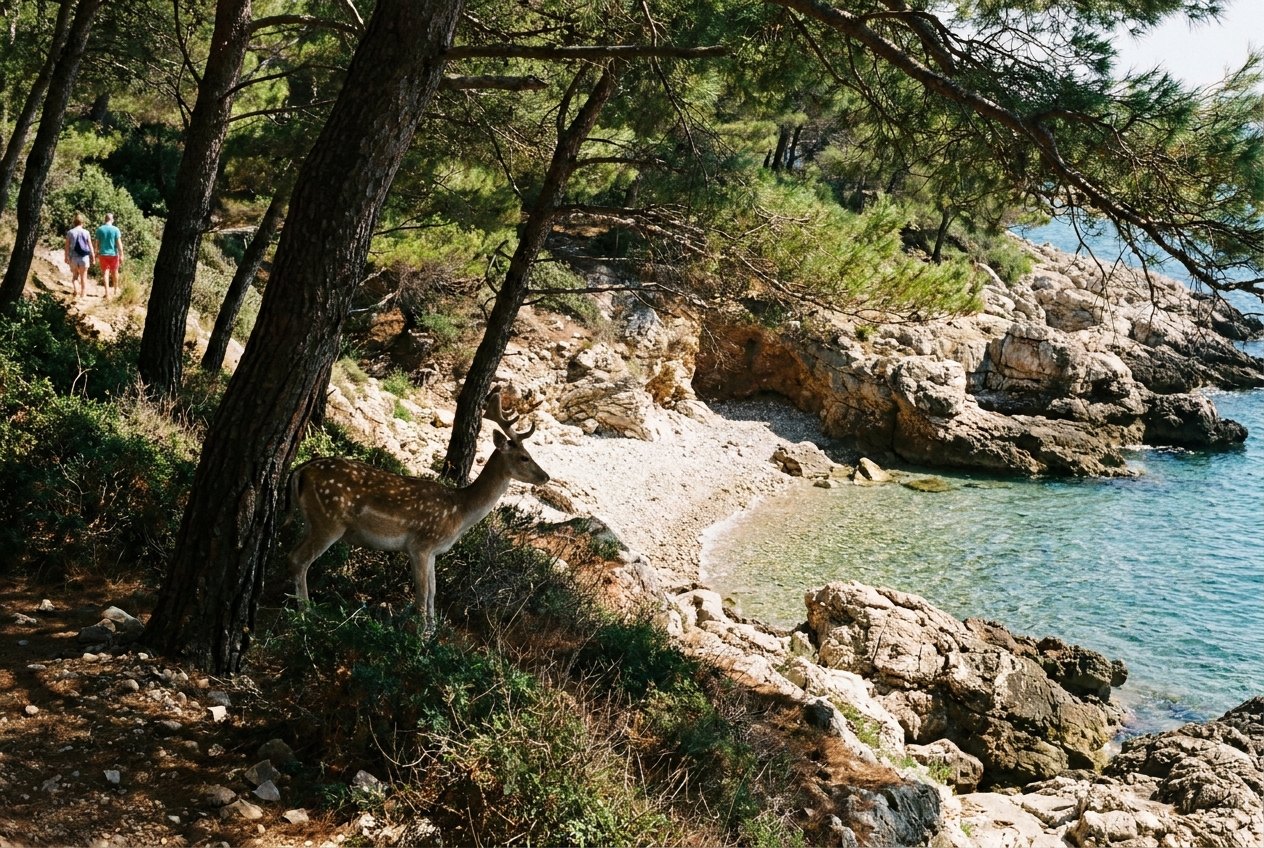
Badija is the largest of a small group of islands lying in the channel just east of Korčula Town. It is about a kilometre and a half long, covered in pine woods, with a rocky shore and small coves. At its edge facing the town stands a Franciscan monastery, and the island is home to a herd of fallow deer that wander freely among the trees.
The monastery
Franciscan friars settled on Badija in the late 14th century, and the monastery and its church were built and rebuilt over the following centuries, with a fine Gothic cloister. In the 20th century the friars lost the island, and the buildings were used for other purposes, including as a sports and recreation centre. The monastery was later returned to the Franciscans. Parts of it can be visited.
Deer and pines
The deer on Badija are used to people and often come close, especially near the monastery and the landing, hoping for food. Resist feeding them; it is bad for them and makes them pushy. Walking paths lead through the pine woods around the island, and the resin scent and the sound of the cicadas in summer are part of the experience.
see also, a few pages onLumbarda: vines on sandSwimming
Badija's shore is rocky, with flat slabs and small pebble coves. The water is clear, and swimming from the rocks is the main activity for most visitors. Some parts of the shoreline are traditionally used by naturists; signs mark these areas. Shade under the pines is welcome in the heat of the day. Facilities on the island are limited, so bring water and food.
Small taxi boats run from the harbour of Korčula Town to Badija in summer, taking only a few minutes. Boats run regularly through the day, but check the return times and the last boat back before you set off. Out of season, boats are fewer or need to be arranged. Kayakers sometimes paddle across from town on calm days.
A half day is enough for a walk, a swim and a look at the monastery. Combine it with an evening in Korčula Town, or with the sandy beaches of Lumbarda further along the coast.