
Korčula is one of the larger islands of southern Dalmatia, long and green, with vineyards, olive groves and pine woods. Its main town sits on a small, oval peninsula at the island's eastern tip, facing the Pelješac peninsula across a narrow channel. Inside its walls, the old town is only a few hundred metres across, but it is one of the best preserved medieval towns on the Adriatic coast.
The fishbone plan
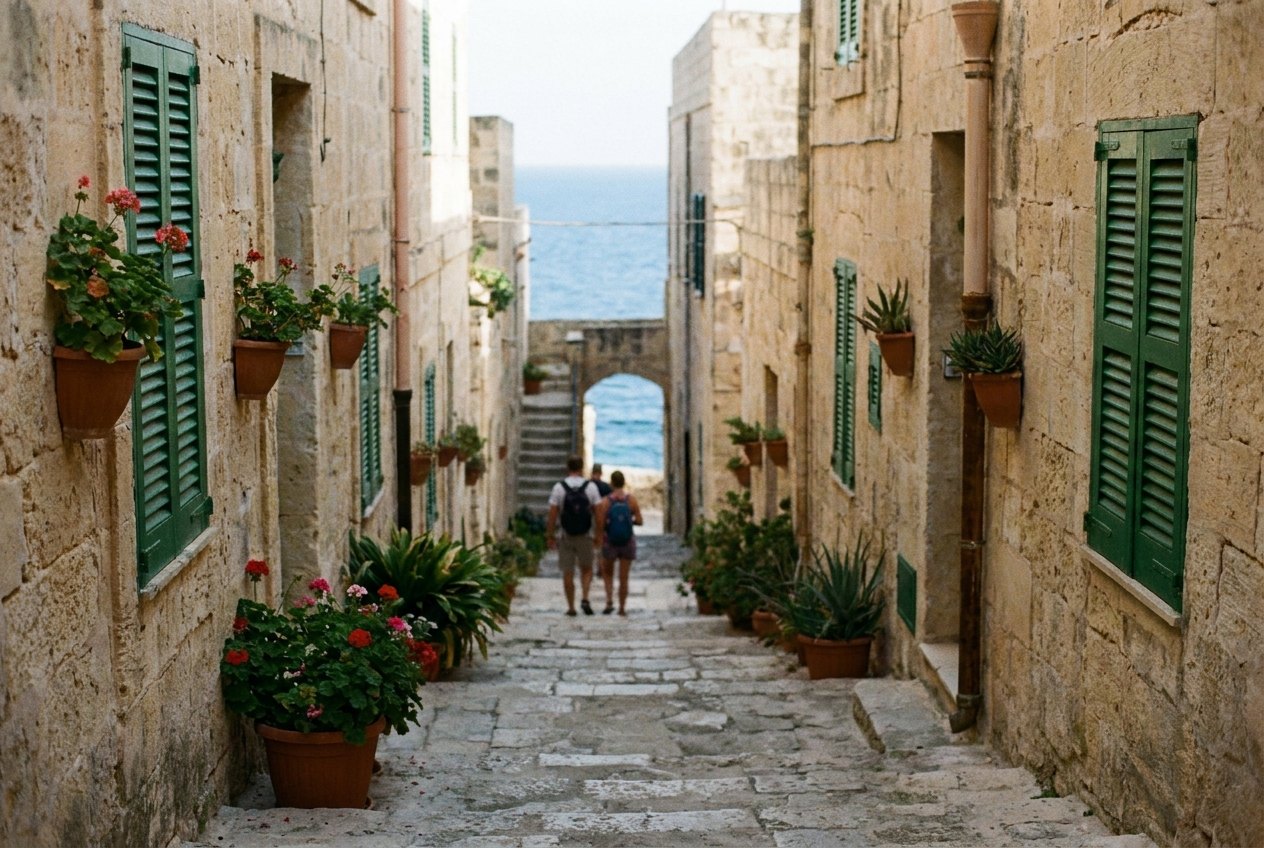
The old town is laid out on a single main street running along the spine of the peninsula, with short side streets branching off at right angles on both sides, like the bones of a fish. The design is practical. On the western side, the side streets run straight, letting the cooling summer breeze from the north-west blow through. On the eastern side, the streets are slightly curved, breaking the force of the cold winter winds. Narrow lanes and steps keep the houses in shade.
Walk the main street from end to end first, then explore the side streets on each side, and you will feel the difference: cooler air in the west in summer, shelter in the east.
The old town is laid out on a single main street running along the spine of the peninsula, with short side streets branching off at right angles on both sides, like the bones of a fish.
The Land Gate and the walls
The main entrance to the old town is through the Land Gate, at the top of a broad flight of steps on the south side. Above it rises the Revelin tower, part of the town's defences from the 14th century, which can usually be climbed for a view over the rooftops and the channel. Much of the town wall survives, with round towers at the corners; on the western side, the walls have been turned into a promenade by the water.
St Mark's Cathedral
At the highest point of the peninsula, the main street opens onto a small square in front of St Mark's Cathedral, built mainly in the 15th and 16th centuries from the island's own fine limestone. Korčula was famous for its stonemasons, who worked across the Adriatic, and the cathedral shows their skill: carved doorway, a rose window and a slender bell tower topped with an ornate crown. Inside, the cathedral holds paintings and treasures of the town's churches.
see also, a few pages onMoreška, the sword danceThe Marco Polo story
Korčula claims to be the birthplace of Marco Polo, the Venetian traveller of the 13th century, and a house in the old town is presented as his family home. The claim is a matter of local tradition rather than firm evidence; historians generally consider Venice his birthplace, though a family with a similar name did live on the island. Either way, a naval battle between Venice and Genoa fought off Korčula in 1298, after which Marco Polo was captured, is part of the town's story.
Evenings on the walls
As the sun goes down behind the hills of the island, the western walls and the promenade below them fill with people watching the light change over the channel. It is the best time to be in the old town, cooler and quieter after the day's visitors have gone. In summer, evenings also bring performances of the Moreška sword dance.