
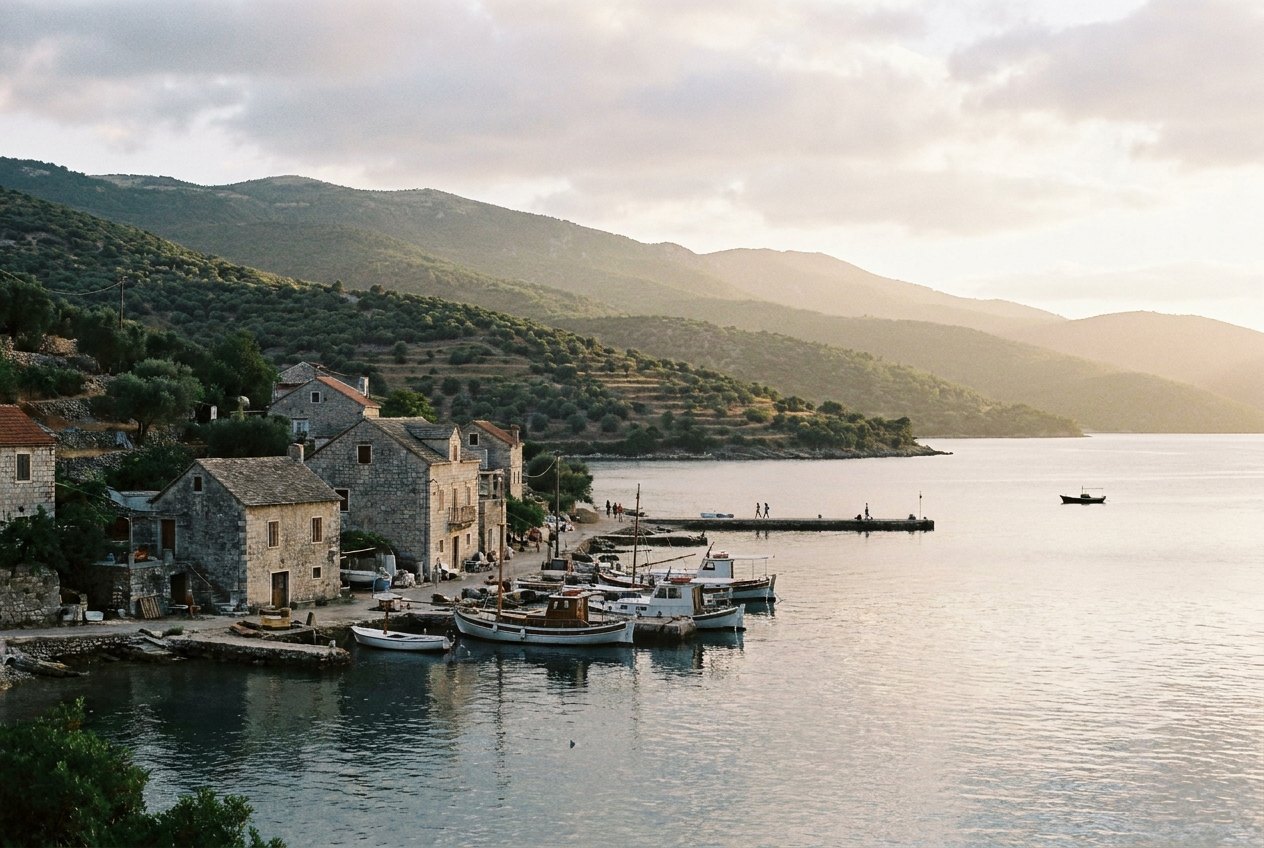
Vela Luka lies at the head of a long, deep bay on the western end of Korčula island, about 45 kilometres from Korčula Town. Its name means big harbour, and the sheltered bay has made it a port and fishing town for centuries. It is a working town rather than a resort, with a long harbour front, shipyards, olive groves on the hills around it and a strong tradition of music.
Vela Spila
On a hill above the town, a short climb from the centre, lies Vela Spila, a large cave with a wide entrance and an opening in its roof. Excavations have found layers of human presence going back many thousands of years, to the Stone Age, with tools, pottery, ornaments and some of the oldest ceramic figurines found in Europe. The cave is a protected archaeological site.
The cave can be visited in the warmer months. Even when it is closed, the climb is worth it for the view over the bay and the town.
Proizd and the islets
Off the north-western tip of the island lies Proizd, a small islet with beaches of white stone slabs and very clear water. In summer, boats run from Vela Luka to Proizd and to other islets in the area. The beaches are rocky but smooth, and the water is some of the clearest around the island. Bring shade, water and food for a day.
see also, a few pages onMoreška, the sword danceSongs and olive oil
Vela Luka is known throughout Croatia for its klapa singing, a style of unaccompanied harmony singing from Dalmatia, recognised by UNESCO as intangible cultural heritage in 2012. Groups from the town have long been among the best known. In summer, concerts and festivals are held on the harbour front, and you may hear singing in the streets in the evening. The town also has its own sword dance company, the kumpanija.
The hills around Vela Luka are covered in olive groves, and olive oil is a source of local pride. Small producers sell oil from their homes; look for hand-written signs.
The town itself rewards a slow walk. The harbour front runs for a long way around the head of the bay, past boats, small squares and the parish church, and side streets climb into older quarters of stone houses with gardens of figs, vines and lemons. In the evening, families stroll the waterfront, children swim from the quay and the cafés fill. Unlike Korčula Town, Vela Luka sees fewer day visitors, and it keeps the rhythm of an island town that lives from the sea and the land all year.
Ferries and catamarans connect Vela Luka with Split on the mainland, usually stopping at other islands on the way. The car ferry is the slower but steadier option in rough weather, and in summer it fills early, so arrive well before departure if you are driving. Buses cross the island to Korčula Town. Timetables change with the season; check them before planning a day trip. For the eastern end of the island, see Korčula Town and Lumbarda.