
Most travel notebooks start with good intentions and end, a few pages in, with a list of meals. The problem is rarely discipline. It is that the notebook asks for too much at the end of a long day. Notes that are quick to make, and made in the moment, are the ones that get written, and they are also the ones that bring a place back years later.
Write small, write now
Carry a notebook small enough for a pocket and a pen that works, plus a spare. Write in the moment, in short lines: a phrase overheard, the colour of a door, the price of a coffee, the name of a street. Do not try to write sentences. A few words, written at the time, carry more than a careful paragraph written later from memory.
Develop your own shorthand. Abbreviations for things you note often, symbols for weather, times, money or directions, initials for people you meet. The aim is speed: if writing a note takes a minute, you will skip it; if it takes ten seconds, you will make it.
Use the senses
Photographs capture what you see. The notebook is for everything else: the smell of a market, the noise of a square at night, the taste of a dish, the heat on the stones, the feel of the wind on a ferry deck. These details are the first to fade and the most powerful when you read them again.
see also, a few pages onDolac market, morning in red and whiteNames, numbers and maps
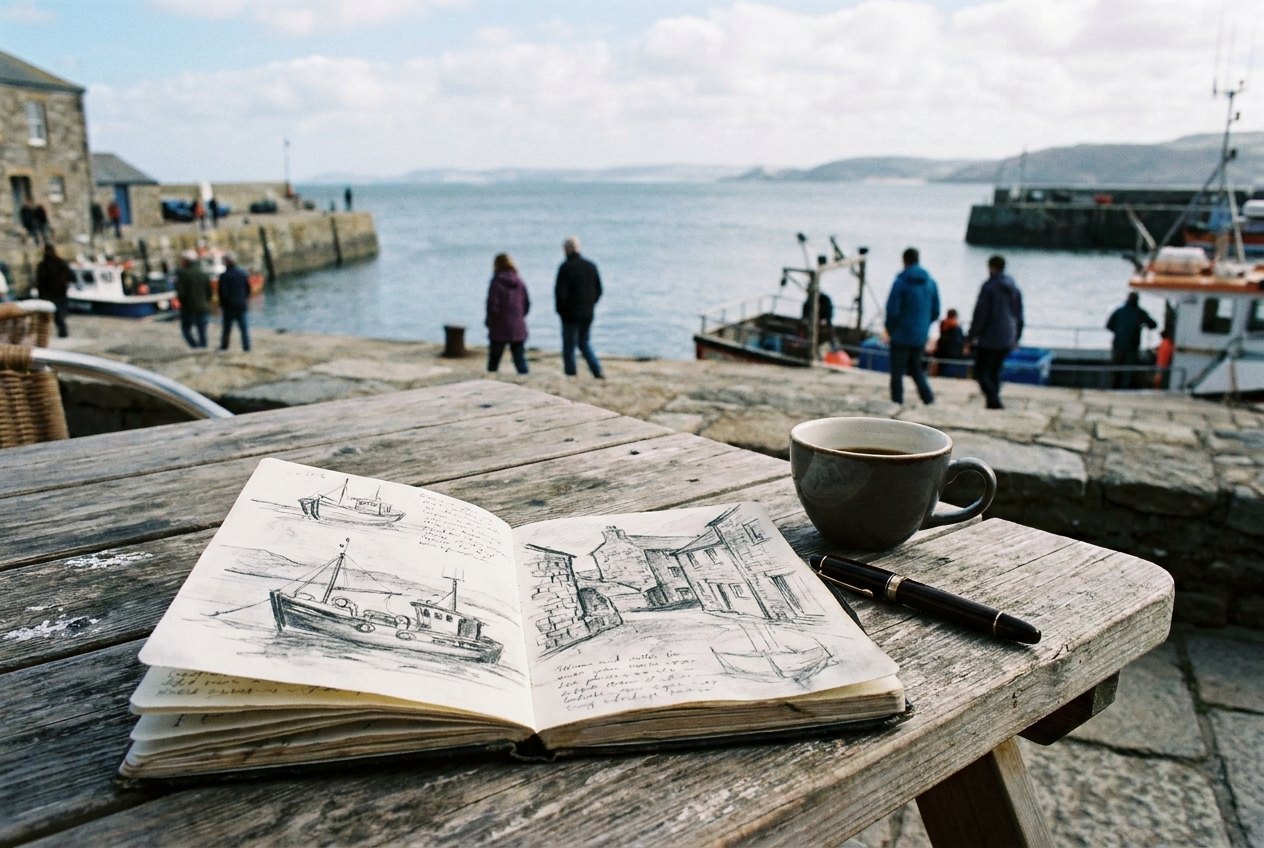
Write down the facts that memory loses: place names spelt correctly, times of buses and ferries, prices, the number of steps to a viewpoint, the name of the dish. Draw rough maps: the shape of a town, the way from the station, where the bakery was. A quick sketch, even a poor one, makes you look harder at what is in front of you, and that is half its value.
The evening entry
At the end of the day, take ten minutes to expand. Read the day's short notes and add a few lines: what surprised you, what you would do differently, what you want to remember. Keep it short and keep it regular. Write the date and the place at the top of each page.
Rereading
A notebook is written to be reread. Number the pages, leave the first page for a list of places with page numbers, and keep tickets or labels between the pages if you like. On a long trip, read back through every few days; it will change what you notice next.
Places with layers of history and daily life are perfect training grounds. A morning at Dolac market, an hour in the museum of things left behind or an evening on the walls of Korčula will fill pages without trying.